

A Deeper Dive Into Fish Oils
The Basic Chemistry of Fish Oil A.K.A. Omega-3 Fatty Acids (Intro Extended)
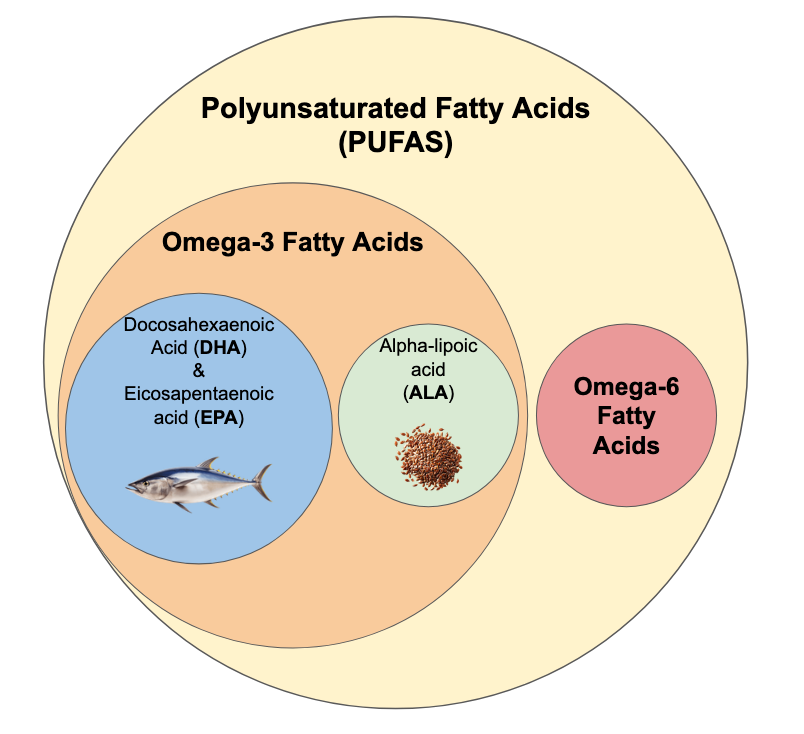
Omega-3 fatty acids are one of two major classes (along with omega-6 FAs) of polyunsaturated fatty acids (PUFAs). Let’s break that down.
Fatty acids are compounds consisting of a carboxylic acid connected to a long, usually unbranched hydrocarbon (hydrogen and carbon) chain. The “polyunsaturated” in PUFAs indicates the presence of more than one (“poly”) double (or triple*) bond (“unsaturated”) in the hydrocarbon chain.
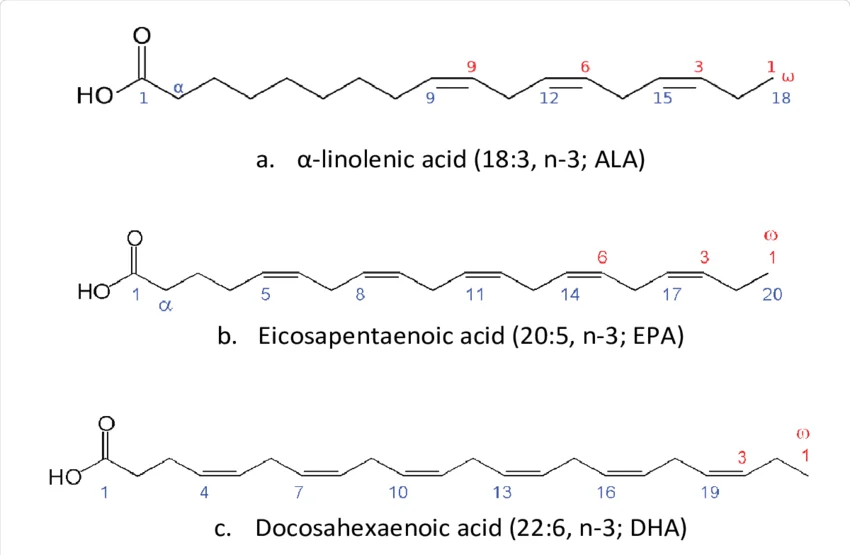
“Omega-3” and “Omega-6” refer to the position of a specific double-bond in the hydrocarbon chain. Omega-3 FAs have a double bond located three carbons before the methyl end of the chain. Omega-6 FAs have a double bond six carbons before.
*Triple bonds are redox reactive compounds, which makes them toxic for consumption as they can impair redox-modulated cellular systems. Thus, when it comes to dietary unsaturated fatty acids, typically the unsaturated factor is a double bond[s]. [Source]
There are multiple compounds under the umbrella of Omega-3 FAs. Two of the three major ones, DHA and EPA, are found in fatty marine animals (fish and seafood). The third, ALA, is a plant-based Omega-3, which is most notably found in flaxseed oil, chia seeds, and walnuts.
Major Clinical Trial Findings (Extended)
Claim 1: Omega-3 fatty acids can reduce the risk of cognitive decline.
Where does this come from: DHA is known to be an essential component in brain cells, (specifically brain cell membrane phospholipids), and have been observed to be lower in patients with Alzheimer’s disease. However, whether or not Alzheimer’s disease is a result of low DHAs remains to be seen.
Conclusion: Not fully proven.
Meta-analyses that review and synthesize the results of previous studies conclude that omega-3 supplementation has no impact on cognitive function, and does not slow cognitive decline.
| TRIAL | YEAR | PARTICIPANT HEALTH | NUMBER OF PARTICIPANTS | COGNITIVE EFFECTS? |
| Rotterdam Study | 1990-1996 | Normal Cognition | 5395 | Yes in first 2.1 years, none after 6 |
| AREDS2 | 1992-2005 | Age-Related Macular Degeneration or Cataracts | 2073 | None |
| OmegaAD | 2000-2004 | Elderly | 204 | None in most, slowed decline for very mild AD |
| Quinn et al. | 2007-2009 | Alzheimer’s Disease | 295 | None |
| Lee et al. | 2012 | Elderly, low-socioeconomic-status | 32 | Yes; improved memory! |
Summary Table of Clinical Trials on Cognitive Impact
The Rotterdam Study (1990-1996) followed 5395 subjects, ages 55 and older, and with normal cognition. Over the course of about 2.1 years, 58 participants had developed dementia or Alzheimer’s disease (AD). A 60% lowered risk of dementia and a 70% lowered risk of AD was found in participants who had higher dietary fish consumption. However, after a longer, six year follow-up, researchers found that 197 participants had developed dementia/AD, and there was no association between PUFA intake and cognitive decline.
The AREDS2 trial (1992-2005) studied participants with Age-Related Macular Degeneration (AMD). Participants were either instructed to take PUFA supplements, or a placebo, and were tested on their cognitive function every two years in the five year study (among other assessments). Within the 3073 eligible participants with an average age of 72.7, no statistically significant difference in cognitive function was observed between those who took placebo and those who took supplements.
Another study from 2007-2009 tested if DHA could slow cognitive decline in patients with Alzheimer’s disease. 295 participants with mild to moderate AD took either placebo or DHA supplements everyday for 18 months. By the end, both groups showed similar levels of cognitive decline.
The OmegaAD trial (2000-2004) tested the cognitive ability in 204 elderly patients. After six months of daily intake of either omega-3s or placebo, results showed no difference in the rate of cognitive decline. But, keep reading for a glimmer of good news…
But! There is hope for those with [very] mild cognitive impairment…
There is a little bit of evidence that suggests individuals with mild cognitive impairment might see improvements in cognitive ability and/or reduced cognitive decline.
The very same OmegaAD trial did observe slowed decline within a small subset of patients with very mild AD!
A 12 month study in Malaysia (2012) on 32 elderly subjects saw improved memory in the group that took fish oil supplements compared to the placebo group.
Author’s verdict: Omega-3s are not very impressive in the department of preserving cognition, but it may yet be too hasty to assume there is zero positive impact.
Claim 2: Omega-3s improve Age-Related Macular Degeneration (AMD)
Where does this come from: DHA is not just important in brain cells, but it is also utilized in the phospholipids of retinal (eye) cells.
Conclusion: There is an effect! Omega-3s may potentially be a cheap and accessible option for treatment of AMD.
| TRIAL/STUDY NAME | YEAR | PARTICIPANT HEALTH | NUMBER OF PARTICIPANTS | EFFECTS? |
| AREDS2 | 2005 | 2132 | Lowered risk of AMD progression | |
| AREDS2 | 2005 | 1837 | 30% reduction in disease progression |
Summary Table of Clinical Trials Related to AMD
The AREDS2 trial (1992-2005) found a 30% reduction in disease progression over a 12 year period in 1837 participants. In another 2132 participants, researchers found an association between omega-3 intake and decreased risk of AMD progression.
Author’s verdict: The data looks promising! But more research needs to be done to ascertain the AREDS2 findings.
Claim 3: Omega-3s reduce risk for cardiovascular disease.
Where does this come from: Several observational studies have linked having a seafood-rich diet to lowered heart disease. Additionally, Vascepa is a medication prescribed to reduce heart attacks and stroke in patients with cardiovascular disease and/or diabetes– and the active compound in Vascepa is a high-dosage of an EPA-containing compound.
Conclusion: Any beneficial effects are likely not from the omega-3s alone.
| TRIAL/STUDY NAME | YEAR | PARTICIPANT HEALTH | NUMBER OF PARTICIPANTS | EFFECTS? |
| ASCEND | 2005 | 15,480 | Same risk of vascular events | |
| VITAL | 2010-2015 | 26,000 | Same risk of cardiovascular disease*19% reduction in individuals with higher fish diets found |
Summary Table of Clinical Trials Related to Cardiovascular Health
ASCEND (2005) did not see a lowered risk of vascular events associated with n-3 fatty acid intake in the 15,480 diabetic patients that it studied.
VITAL (2010-2015) was the largest-scale clinical trial following almost 26,000 individuals investigating the cardiovascular effects of marine omega-3s (DHA and EPA). Researchers found that taking 1 gram of omega-3s daily for five years did not result in lowered cardiovascular disease (CVD). However, individuals who had higher fish diets did have 19% reduction in CVD events.
Author’s verdict: Just as the American Heart Association recommends, a high fish/seafood diet will likely benefit you! Especially compared to taking fish oil supplements.
Method[s] of Action
Usage in Cell Membranes: DHA in particular is incorporated into the cell membranes of retinal, brain and sperm cells.
Absorption: Similarly to other dietary fats, PUFAs are absorbed in the small intestine with a high efficiency, (approximately 95%).
Anti-Inflammation:
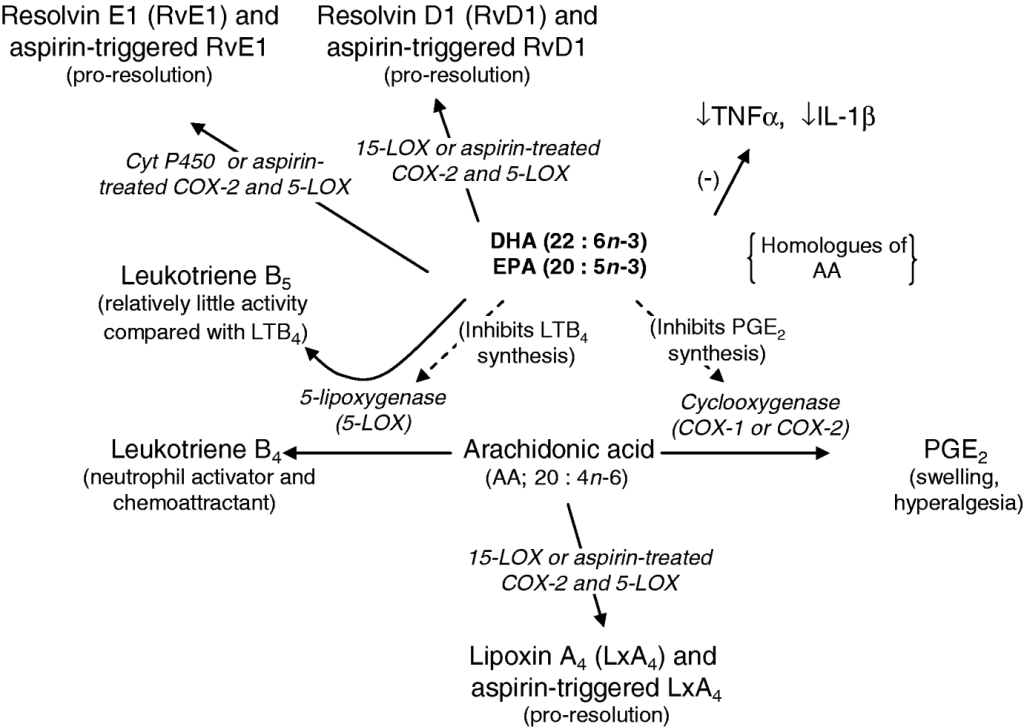
- Competitive Inhibition of Eicosanoid Synthesis:
PUFAs are one of the predecessor molecules of eicosanoids, or the signalling molecules that mediate the inflammatory response. Arachidonic acid (AA) is an omega-6 PUFA that is metabolised to form pro-inflammatory eicosanoids. EPA and DHA as PUFAs have high binding affinity for the same enzymes that metabolize AA, and thus act as competitive inhibitors. EPA can possibly be metabolized, however the resulting EPA-derived eicosanoid has much lower pro-inflammatory activity.
- Formation of Pro-Resolution Molecules:
DHA and EPA are also precursors to resolvin molecules, which as the name suggests, contribute to the resolution of acute inflammation.
Fatty Acids and Cholesterol:
- Downregulation of cholesterol, fatty acid and triglyceride synthesis via the SREBP pathway:
O3FA suppresses lipogenic expression by decreasing hepatic (liver) SREBP expression, which are involved in cholesterol (LDL), triglyceride (fats) and fatty acid synthesis.
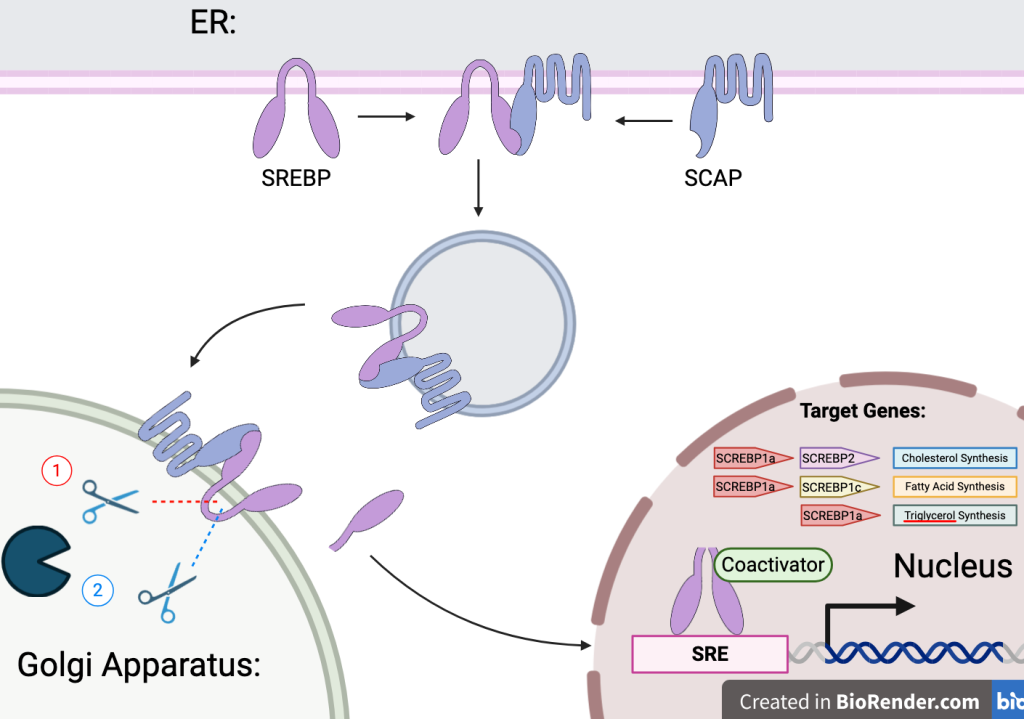
The SREBP Pathway
There are three relevant subtypes of SREBPs. SREBP2 is associated with fatty acid synthesis, SREBP-1c is associated with triglyceride synthesis, and SREBP1 is associated with both, and then additionally cholesterol synthesis.
Omega-3s have been observed to reduce SREBP1 and SREBP2 nuclear activity, and block cleavage of specifically SREBP-1c by proteins, a step required to activate SREBP.
- Downregulation of HMG-CoA reductase and FPP synthase in the cholesterol synthesis pathway:
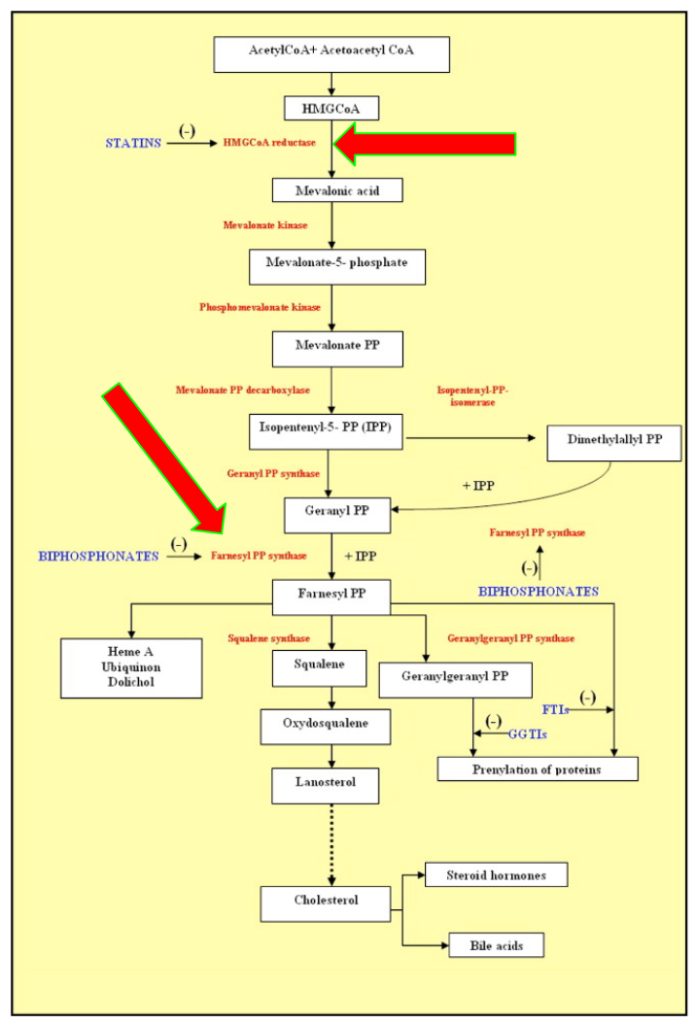
Both HMG-CoA reductase and FPP synthase enzymes are encoded by genes activated by SREBP. Omega-3s are shown to inhibit transcription of these genes.
Omega-3s act similarly to statins (used to treat high cholesterol) and biphosphonates (used to treat osteoporosis) in this pathway. Ultimately, their effect is to reduce cholesterol synthesis.
- Slowing of feedback inhibition of fatty acid oxidation (metabolism):
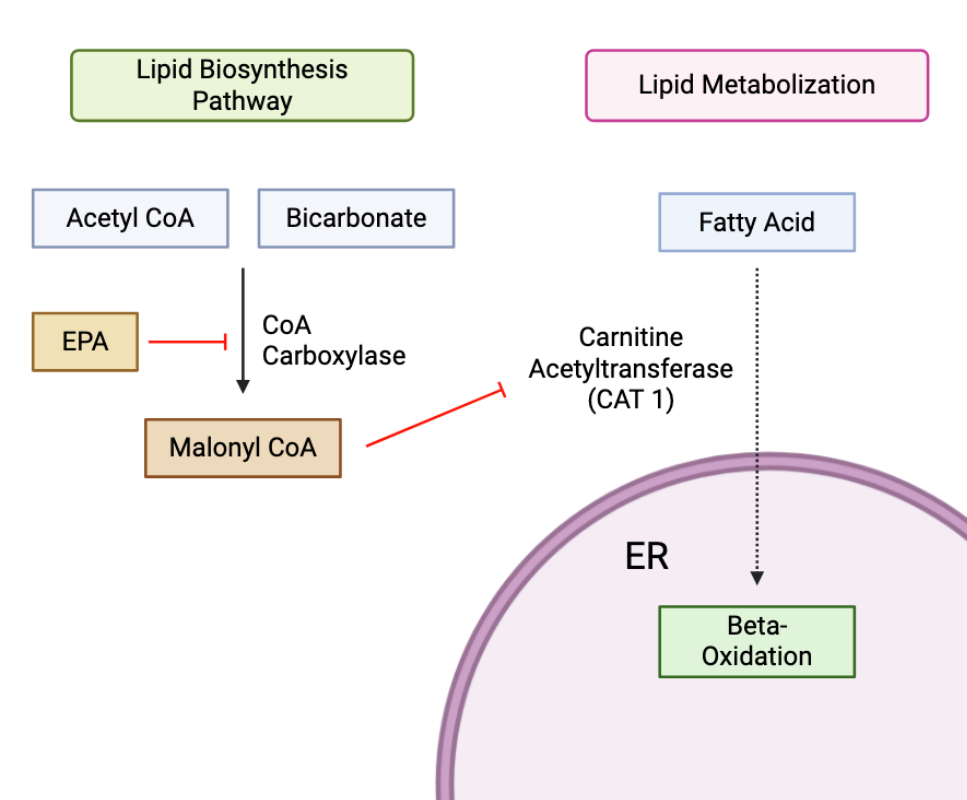
EPA inhibits CoA carboxylase, which synthesizes malonyl-CoA. Malonyl-CoA inhibits CAT1, which allows fatty acids to enter the mitochondrial matrix to be converted to acyl-CoA → acetyl-CoA → ATP via beta-oxidation.
Additionally, omega-3 fatty acids have also been shown to decrease the sensitivity of CAT1 to malonyl-CoA.